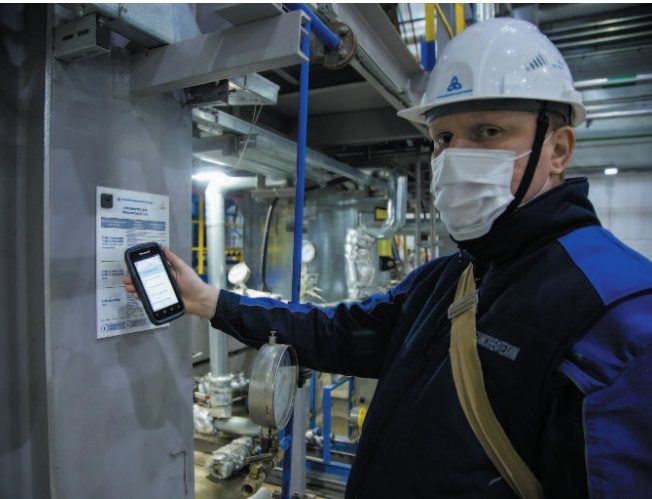
The Success of Digitalization Lies in a System for Analyzing Production Data. Commentary by Irina Vendilo for the journal «Chemical Aggregates»
The topic of digitalization in the chemical industry is continued by Irina Vendilo, Vice-President of the Russian Union of Chemists, General Director of the «Roshimreaktiv» Association:
Today, the industry needs a more balanced portfolio of innovations to transform key existing and develop new business processes. The main task is to identify processes untouched by digital transformation. Digital productions are capable of constantly reducing costs, producing the same products cheaper, and bringing new goods and services to market even faster. Every day, the issue of digitalization becomes not only a matter of competitiveness but often the only condition for the survival of producers of non-unique chemical products. The need for digitalization will constantly grow; it is already claiming the title of a mass industrial trend. In large enterprises, it is much easier to justify the economic effect of digitalization due to the economy of scale; however, solutions are appearing on the market that are also oriented towards smaller productions.
Changes are coming in the value chain in the segment of advanced materials, namely in the segments of creating infrastructures using analytical data (for example, monitoring production systems and their potential, assessing raw material consumption, managing services, working in the triad – data aggregation, their analysis, and further creation of flexible structures for managing various systems and managing digital activity in accordance with new priorities). Among the main vectors of digital transformation are optimizing the technological regime to reduce costs, increase conversion, and improve performance indicators, predicting quality characteristics based on the technological regime and the condition of units and aggregates of industrial equipment. An important aspect in this regard is also the work of engineering-mathematical models for units and aggregates, as well as the assessment and forecast of the «Equipment Health Index».
Implementing a digitalization project requires quality data and bringing the project to industrial operation. On the side of obtaining quality data, problems arise from a lack or poor quality of measuring equipment and IT infrastructure at enterprises. This is especially characteristic of small chemical productions. On the side of bringing the project to industrial operation, the work is complicated by two main barriers – the difficulty in selecting a responsible contractor, and internal personnel instability related to the unwillingness/resistance of the company’s own staff to restructure work according to a new digital pattern, including due to the exposure of personal shortcomings and omissions in their professional tasks. When developing and implementing a digital strategy, the role of management is extremely important since the results of digital transformation can affect the overall performance of the entire organization. The most promising technologies, in my opinion, are related to process control using machine learning. Various training technologies using virtual and augmented reality technologies, both within corporate and training centers and directly in production, are promising.